Knowledge beats luck every single time, especially with trees.
Property owners often underestimate what proper tree extraction involves. They see a chainsaw and think the job looks simple. It rarely is. One miscalculated cut sends tons of wood sideways. Gravity doesn’t negotiate.
Tree removal in Rockford demands an understanding of local conditions. Michigan’s clay-heavy soils behave differently from sandy loam. Freeze cycles affect root system stability uniquely here. Smart decisions require specific information.
This guide delivers exactly that. We cover equipment, timing, and hidden costs. We explain permit requirements and neighbor liability issues. We even discuss how tree elimination affects your property’s appraised value.
Understanding What Professional Tree Felling Actually Involves
Television makes tree cutting look dramatic and fast. Reality involves more planning than action.
- Site assessment happens before any equipment arrives. An ISA-certified arborist examines the tree’s lean angle. They carefully check for indicators of trunk decay.
- Drop zone calculations require geometry skills. Professionals measure the canopy spread precisely. They account for branch weight distribution throughout.
- Escape routes get planned for every worker. Two clear paths minimum. Safety isn’t optional in arboriculture services.
The Equipment Factor:
Different situations demand different tools. Here’s what professionals actually use.
| Equipment | Primary Use | Typical Cost to Own |
| Chainsaw | Cutting and sectioning | $300-$2,000 |
| Wood chipper | Debris processing | $15,000-$50,000 |
| Stump grinder | Below-grade removal | $10,000-$35,000 |
| Crane | Heavy lifting over obstacles | $200,000+ |
| Rigging equipment | Controlled descent of sections | $2,000-$10,000 |
This investment explains professional pricing. Quality timber clearing requires serious capital.
How Michigan’s Soil Composition Affects Your Decision
Here’s something most articles skip entirely. Soil matters enormously in planning tree takedown.
- Rockford sits on glacial till deposits. This mix contains clay, sand, and gravel. Drainage patterns vary wildly across properties.
- Heavy equipment compacts soil significantly. A loaded truck exerts 40+ PSI pressure. That crushes the air pockets that roots need desperately.
- Compaction damage extends beyond the work zone. Studies show effects spreading 2-3 times the equipment width. Your remaining trees suffer silently afterward.
Protecting Adjacent Trees:
- Request plywood or mat pathways for equipment. This distributes weight across larger areas. Root system damage decreases substantially.
- Specify access routes away from tree drip lines. The canopy edge indicates root spread below. Keeping equipment outside protects underground structures.
- Water deeply after heavy equipment leaves. This helps soil particles resettle properly. Oxygen returns to compacted zones faster.
Professional vegetation removal accounts for these factors automatically. Budget operations rarely do.
Permit Requirements and Neighbor Liability Explained
Rockford generally follows Kent County’s tree ordinances. But specifics matter for your situation.
- Heritage trees over 36″ in diameter require permits. Removal without approval triggers fines. Some protected species need additional documentation.
- Trees within 10 feet of property lines create questions. Who owns them legally? Michigan follows trunk location rules primarily.
- The property owners jointly own boundary trees. Neither party can authorize tree dismantling alone. A written agreement prevents legal headaches later.
Liability Considerations:
- Healthy trees that fall remain “acts of God.” Property owners bear no automatic liability. Insurance handles damages through standard claims.
- Diseased or dead trees change everything legally. Documented neglect creates liability exposure. Hazard tree abatement becomes a legal necessity.
- Written arborist assessments significantly protect property owners. An ISA-certified arborist’s opinion carries legal weight. Documentation proves you acted responsibly.
Tree removal in Rockford involves more than just cutting. Legal awareness prevents expensive surprises.
The Property Value Equation Nobody Discusses
Trees affect home appraisals more than most realize. Sometimes removal increases value. Sometimes it decreases substantially.
- Mature oaks add 10-15% to property values. Removing them without replacement hurts resale potential. Appraisers specifically note the presence of the specimen tree.
- Problematic trees subtract value when documented. Foundation-threatening root systems concern buyers immediately. Strategic tree extraction actually helps here.
- Curb appeal calculations heavily involve tree placement. Empty front yards feel exposed and unwelcoming. Replacement planting maintains visual balance.
When Removal Makes Financial Sense:
- Dead or dying trees signal neglect to buyers. Hazard tree abatement demonstrates responsible ownership. Clean lots sell faster consistently.
- Construction projects require clear footprints. New additions need access to space and light. Timber clearing enables property improvement.
- Disease prevention sometimes demands removal. Infected trees threaten healthy neighbors nearby. One sacrifice protects your entire landscape investment.
An ISA Certified Arborist helps objectively calculate these trade-offs. Their assessment considers long-term impacts on property value.
Seasonal Timing and Cost Optimization Strategies
When you schedule tree felling, it directly affects pricing. Michigan’s seasons create distinct windows.
Winter Advantages:
- Frozen ground supports heavy crane equipment better. Soil compaction concerns decrease significantly. Access improves across previously soft areas.
- Deciduous trees weigh less without leaves. A lighter canopy means easier handling. Tree cutting proceeds faster overall.
- Demand typically drops during cold months. Arboriculture services offer better scheduling flexibility. Some companies discount winter work by 15-20%.
Spring Cautions:
- Saturated soils make equipment access problematic. Ruts and damage become more likely. Restoration costs add up quickly.
- Oak wilt transmission peaks from April through July. Chainsaw wounds create beetle entry points. Never cut oaks during this window.
- Storm season drives emergency pricing upward. Planned tree elimination always beats reactive calls. Schedule before problems become urgent.
Equipment and Technique Breakdown for Informed Decisions
Understanding methods helps evaluate contractor proposals intelligently.
Standard Removal Process:
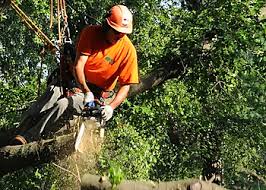
- Climbers ascend using rope and saddle systems. They attach rigging equipment to the upper sections. Controlled cutting begins at the canopy top.
- Each section is lowered systematically by rope. Ground crews guide pieces away from obstacles. Nothing falls freely in professional tree dismantling.
- Trunk sections typically come down last. A wood chipper processes branches immediately. Cleanup happens continuously throughout.
When Cranes Become Necessary:
- Trees within 10 feet of structures usually require cranes. The margin for error disappears completely. Lifting beats dropping every time.
- Power line proximity often requires crane assistance. Utility coordination adds complexity. Professional timber clearing handles these arrangements.
- Difficult access lots benefit from crane reach. The equipment stays on the street. Sections travel overhead to safe landing zones.
- Crane rental adds $500-$2,000 to project costs. Large-scale vegetation removal amortizes this expense across multiple trees. Bundle work for better pricing.
Stump Decisions: Grind, Remove, or Leave?
Tree takedown creates immediate stump questions. Each option serves different purposes.
- A stump grinder reduces stumps 6-12″ below grade. Surface disappears within weeks after grinding. The root system remains but decays naturally over the years.
- Complete root system extraction costs 3-5x more. This approach suits construction preparation specifically. Most residential situations don’t require it.
- Leaving stumps saves money short-term only. They eventually attract termites and carpenter ants. Fungal growth may spread to nearby healthy trees.
Grinding Specifications:
| Depth | Best Use | Typical Cost |
| 4-6″ | Lawn restoration | $75-$150 |
| 8-12″ | Garden bed installation | $150-$300 |
| 18-24″ | Construction preparation | $300-$500+ |
Specify your intended use clearly. Contractors adjust the stump grinder depth accordingly.
Selecting the Right Professional for Your Project
Credentials separate competent operators from risky choices.
- ISA Certified Arborist credentials indicate verified expertise. This certification requires passing comprehensive examinations. Continuing education maintains the credential.
- Insurance documentation needs verification before signing. Call carriers directly to confirm coverage. Certificates can be outdated or falsified.
- Local references matter more than online reviews. Ask for three specific recent Rockford-area projects. Contact those property owners directly.
Red Flags in Proposals:
- Vague scope descriptions invite disputes later. Professional tree extraction quotes itemize everything clearly. Debris removal, stump grinding, and permits appear separately.
- Cash-only requirements suggest tax avoidance minimally. Legitimate businesses accept standard payment methods. Paper trails protect both parties.
- Pressure tactics indicate desperation usually. Quality arboriculture services stay booked consistently. They don’t need aggressive closing techniques.
Moving Forward With Confidence
Tree removal in Rockford becomes straightforward with proper preparation. Knowledge transforms overwhelming decisions into manageable ones.
Start with a professional assessment. An ISA Certified Arborist evaluation costs little or nothing. The insights gained prevent expensive mistakes.
Document everything for your records. Photographs establish baseline conditions clearly. Written proposals create enforceable agreements.
Consider timing strategically for best outcomes. Winter scheduling often delivers better pricing. Planned hazard tree abatement is more cost-effective than emergency calls.
Your property deserves informed decision-making. Your trees — whether they stay or go — deserve professional care.
Ready to assess your trees? Connect with certified arborists who understand Rockford’s unique conditions. Expert guidance makes every difference.