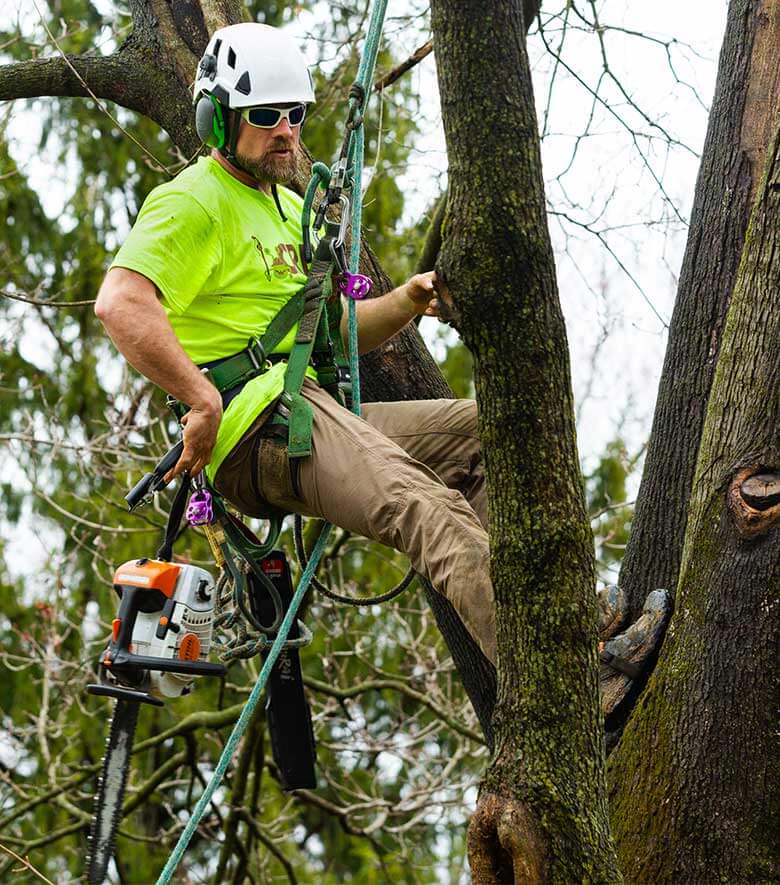
Procrastination rarely pays off. With trees, it can cost thousands.
That leaning maple you’ve been watching? It’s not getting better. The dead oak dropping limbs? It won’t heal itself.
Property owners in Rockford often delay tree extraction. The reasons vary. Budget constraints. Busy schedules. Hoping nature fixes itself.
Nature doesn’t work that way. Declining trees decline further. Problems compound exponentially.
This guide exposes what happens when you wait. We cover financial, legal, and safety consequences. Consider it your wake-up call for tree removal in Rockford.
The Compounding Cost Problem
1. Small Issues Become Major Projects
A diseased limb costs $150-$300 to remove. Wait six months, and the disease spreads. Now the entire tree canopy is affected.
Complete tree take-down runs $500-$2,100. That’s 7x the original fix. The math doesn’t lie.
2. Emergency Pricing Hits Different
Scheduled arbor care costs less than emergency calls. Specialists plan routes efficiently during regular hours. They batch neighborhood jobs together.
Storm damage changes everything. Demand spikes instantly. A certified arborist charges 25-50% more for urgent work.
3. Secondary Damage Multiplies Bills
A falling trunk doesn’t just damage itself. It crushes fences, vehicles, and structures. One delayed tree felling becomes five repair invoices.
Damage Type Average Repair Cost Insurance Complications
| Damage Type | Average Repair Cost | Insurance Complications |
| Roof damage | $5,000-$15,000 | May deny for negligence |
| Vehicle crush | $3,000-$8,000 | Comprehensive required |
| Fence destruction | $1,500-$4,000 | Often excluded |
| Power line contact | $2,000-$5,000 | Utility may bill you |
| Foundation impact | $10,000-$25,000 | Rarely covered |
Liability Risks You Haven’t Considered
1. The “Known Hazard” Legal Standard
Courts distinguish between unknown and known hazards. A tree that falls without warning? Potentially defensible. A tree you knew was dying? That’s negligence.
Documentation works against you here—arborist quotes you ignored become evidence. Neighbor complaints prove prior knowledge.
2. Beyond Your Property Lines
Your tree. Your responsibility. Even when it falls on their property.
Limbs extending over fence lines create liability exposure. Root systems damaging neighbor foundations trigger lawsuits. Delayed vegetation clearing becomes expensive litigation.
3. Municipal Code Violations
Rockford enforces dead tree ordinances. Violations bring fines and forced removal. The city chooses the contractor — not you.
City-ordered tree elimination costs more than voluntary action. They add administrative fees. Payment plans aren’t offered.
Unique Insight: The 18-Month Decay Acceleration Window
Here’s something most property owners miss. Tree decline isn’t linear. It accelerates dramatically.
A tree at 25% health decline loses strength slowly. Once it passes 50% decline, deterioration speeds up. The trunk becomes brittle within 18 months.
This matters for planning. That “stable” dead tree isn’t stable. Its structural integrity decreases weekly. Every storm becomes Russian roulette.
ISA research confirms this pattern. Wood density drops 40% in severely compromised trees. The same wind that it survived last year? It won’t survive next time.
Specialists recognize these tipping points. A certified arborist can estimate remaining structural life. Get assessments before you enter the danger window.
Safety Consequences That Keep Arborists Up at Night
1. Unpredictable Failure Patterns
Healthy trees fall predictably. They follow physics. Decaying trees break rules.
Hollow trunks shatter instead of toppling. Compromised root systems let trees fall sideways. Rotted limbs drop without wind assistance.
2. The Numbers Are Sobering
- Falling trees cause 100+ fatalities annually in the U.S.
- Property damage exceeds $1 billion yearly nationwide.
- Most incidents involve trees showing prior warning signs.
- 70% of tree failures occur during storms.
- The remaining 30% happen on calm days.
That last statistic chills professionals. Calm-day failures mean complete structural collapse. No warning. No time to react.
3. Secondary Hazards Emerge
Dead trees attract the emerald ash borer and other pests. These insects spread to healthy trees nearby. Your delay infects the neighborhood.
Fungal diseases work similarly. Spores travel on the wind. That sick maple threatens every maple within 500 feet.
Unique Insight: Insurance Carriers Are Watching
Here’s an angle competitors ignore. Insurance companies increasingly use aerial imaging. They photograph properties annually.
That dead tree in your backyard? They’ve seen it. Some carriers now deny claims for “pre-existing conditions.” They have timestamped photos proving the tree was dying.
Worse, they’re canceling policies entirely. High-risk properties get non-renewal notices. Finding replacement coverage costs 30-50% more.
The solution? Document your tree cutting proactively. Send removal receipts to your carrier. Prove you’re maintaining the property responsibly.
One certified arborist assessment could save your policy. ISA-credentialed reports carry weight with underwriters. Invest $150 in evaluation to protect thousands in coverage.
How Delay Affects Tree Extraction Complexity
Waiting doesn’t just increase risk. It complicates the actual removal process.
1. Equipment Requirements Escalate
A healthy tree comes down with a chainsaw and ropes. A compromised tree needs different approaches. Brittle wood requires sectional dismantling.
Crane rental adds $500-$1,500 to projects. Severely decayed trees often require them. Healthy trees rarely do.
2. Stump Grinder Challenges Multiply
Fresh stumps grind easily. Old, rotted stumps present problems. The stump grinder catches on soft, punky wood.
Decay also spreads underground. Root system removal becomes excavation. What was a $200 stump job becomes a $600 job.
3. Disposal Costs Increase
Healthy wood has value. Some arborists reduce fees for salvageable lumber. They sell it or convert it to firewood.
Diseased wood can’t be recycled. It requires special disposal. Some municipalities mandate burning for pest-infested species.
Tree Condition Removal Complexity Typical Cost Impact
| Tree Condition | Removal Complexity | Typical Cost Impact |
| Healthy, planned removal | Standard | Base price |
| Early decline | Moderate | +15-25% |
| Advanced decay | High | +30-50% |
| Emergency/storm damage | Very high | +50-75% |
| Failed (already fallen) | Variable | +25% + damage repairs |
The Emotional Cost Nobody Discusses
1. Constant Background Anxiety
Property owners report ongoing stress. Every windstorm triggers worry. Every thunderstorm brings dread.
This psychological burden is real. It affects sleep and peace of mind. Tree take-down eliminates this weight immediately.
2. Neighbor Relationships Suffer
Your dying tree makes neighbors nervous, too. They see those dead limbs hanging over their yard. Resentment builds silently.
Proactive arbor care shows respect. It demonstrates responsibility. Good neighbors handle their dangerous trees promptly.
3. Decision Fatigue Compounds
Delaying doesn’t eliminate decisions. It multiplies them. You reconsider weekly. Should I call now? Can it wait?
Decisive action ends this cycle. One phone call. One appointment. Done.
Unique Insight: The “Widow-Maker” Reality
Arborists use a grim term: widow-makers. These are hanging limbs that fall unexpectedly. They’ve earned their name.
Delayed tree cutting creates more widow-makers. Dead branches break partially, then hang. They appear stable but aren’t.
Children play beneath them. Pets rest in their shade. Guests walk underneath unknowingly.
The liability here is staggering. Personal injury lawsuits for widow-maker incidents exceed property damage claims. Average settlements range from $50,000 to $500,000.
A specialist spots these hazards immediately. They assess limb attachment points professionally. Ten minutes of evaluation prevents tragedy.
When Delay Makes Sense (Rare Cases)
Honesty matters. Sometimes waiting is appropriate:
- Dormant season timing: If no immediate danger exists, late winter tree felling is optimal. Frozen ground protects lawns.
- Permit requirements: Some municipalities require approval. Budget two weeks for paperwork.
- Arborist availability: Quality specialists book out 2-4 weeks. Rushing to unqualified crews backfires.
- Second opinions: When the diagnosis is uncertain, another certified arborist’s perspective helps. But don’t use this as an excuse for an indefinite delay.
These are tactical delays: weeks, not months. The tree still gets addressed.
Taking Action: Your Next Steps
Michigan weather won’t wait for convenient timing. Your property deserves protection now.
Every week of delay increases costs. Every storm raises the stakes. Every ignored warning sign compounds risk.
Tree removal in Rockford doesn’t have to overwhelm you. The right specialist handles everything. Assessment. Planning. Execution. Cleanup.
Stop losing sleep over that problem tree. Contact Monster Tree Service of Grand Rapids for your free evaluation. Our ISA-certified arborists identify risks and provide clear solutions. We bring the crane, chainsaw, and stump grinder — you get the address. Call today and eliminate the hidden dangers threatening your Rockford property.